Oak Tree Removal in Tallahassee
Oaks define Tallahassee, and they are also behind a lot of removal calls. Which oaks tend to fail, which ones are worth saving, and the rules that apply to big oaks and canopy roads.
Free, no-obligation estimate from a local tree service.
Not all oaks are the same
The three oaks you’re most likely to have
The City of Tallahassee’s inventory of public trees lists live oak (17%) and water oak (12%) among the most common species, and laurel oak is widespread on private lots too. They behave very differently as they age.
Live oak
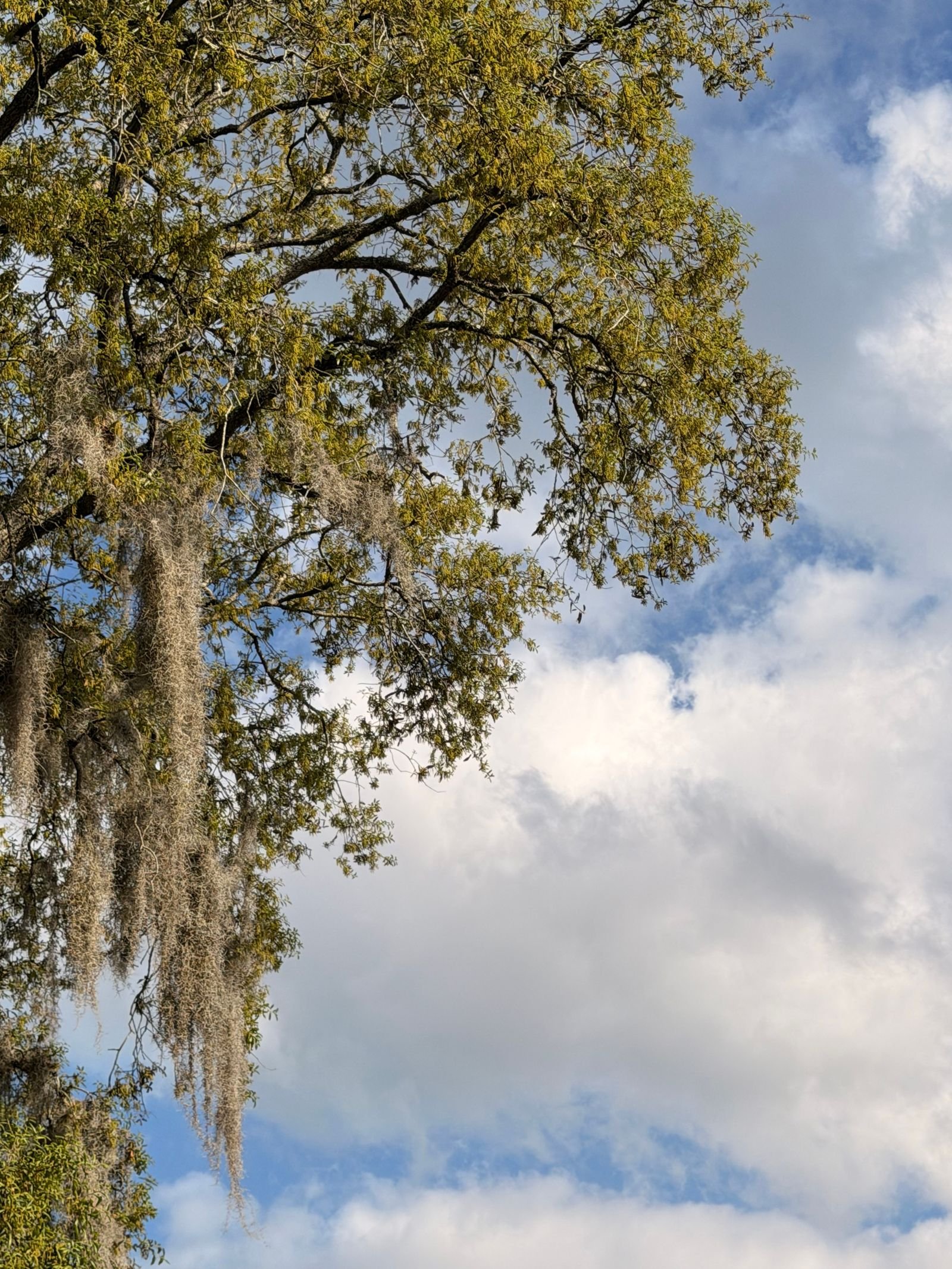
The classic spreading oak of Southern canopy roads. UF/IFAS notes live oaks can live for centuries. A healthy live oak is usually worth keeping and pruning rather than removing, and big ones are the trees most likely to fall under protection rules.
Laurel oak
Fast-growing and common in yards, but UF/IFAS puts its life span at roughly 50–70 years and describes it as prone to decay and root rot. Older laurel oaks failed more often than other trees in hurricanes.
Water oak
Even shorter-lived, at about 30–50 years according to UF/IFAS, and it can begin breaking apart from internal rot at maturity. Many water oaks in older neighborhoods are past that range.
Sources: City of Tallahassee, Urban Forestry; UF/IFAS, Florida oaks; UF/IFAS, laurel oak.
Telling them apart
Signs an oak is in trouble
- Conks or mushrooms at the base or on the root flare, a common sign of internal decay
- Cavities and seams in the trunk, especially where old limbs were cut off
- Dead branches high in the crown, or a thinning canopy compared with nearby oaks
- Large limbs that have already dropped: on decaying laurel and water oaks, more usually follow
- Roots cut or buried by construction, driveways or added soil
Decay on an oak can be well advanced inside before it shows outside. If an older laurel or water oak overhangs the house, an inspection before hurricane season is a reasonable precaution.
Removal or pruning?
A sound live oak with one bad limb usually needs pruning. A laurel or water oak with decay at the base is often a removal. An honest crew will tell you which, even when it’s the cheaper job.
Rules for big oaks
Permits, patriarch trees and canopy roads
Oaks are the trees most likely to run into local rules, because they get big and they line the area’s canopy roads:
- Inside city limits, single-family lots are mainly regulated for trees 36 inches or more in diameter, patriarch trees and wetland trees. A big live oak can easily cross 36 inches.
- Leon County and the City protect designated canopy roads, with a zone extending 100 feet from the road’s centerline.
- Florida Statute 163.045 covers oaks documented by an ISA-certified arborist or licensed landscape architect as an unacceptable risk on single-family property.
Details and official links are in the permit guide.
The job itself
Why oak removals take time
Oak is dense, heavy hardwood, and oaks spread wide rather than tall. A big live or laurel oak over a house is usually taken apart limb by limb, with each section roped down. Wide canopies over roofs, fences and neighbors’ yards are where cranes sometimes come in.
Oak also makes good firewood once split and dried. If you’d like the wood, say so in your request; leaving logs cut to length can reduce the hauling part of the price.
On oak wilt: UF/IFAS describes it as a potential future threat to Florida oaks. Ask your arborist about current guidance on pruning timing.
Source: UF/IFAS EDIS, oak wilt.
Questions
Oak tree removal FAQ
How much does it cost to remove an oak tree?
Can a decaying oak be saved?
How do I know if my oak is 36 inches in diameter?
Are acorns or roots a reason to remove an oak?
What happens to the stump of a big oak?
Have an oak looked at
Tell us the type of oak if you know it, how big it is and what it overhangs. A local tree service will follow up.