Dead Tree Removal in Tallahassee
A dead tree doesn’t get safer with time. How to tell if a tree is really dead, why dead wood is harder and riskier to cut, and what the permit rules say about hazardous trees.
Free, no-obligation estimate from a local tree service.
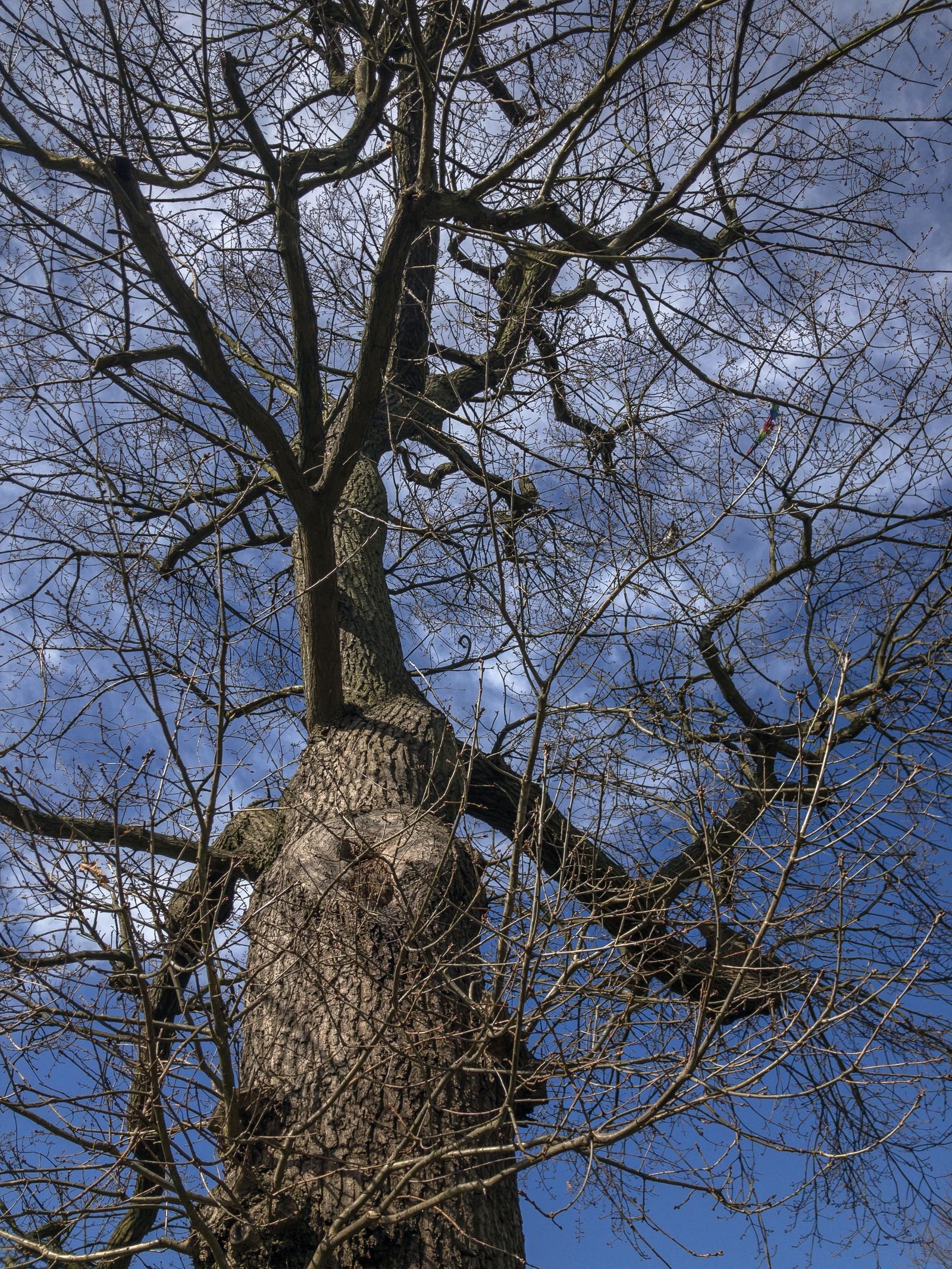
Is it actually dead?
Signs a tree has died, or is dying
Some trees die quietly over a couple of seasons; others go fast after a storm, a lightning strike or root damage. Signs worth checking:
- No leaves in the growing season, or only a few thin tufts, while similar trees nearby are fully leafed out
- Needles turning reddish-brown all over a pine, rather than the normal shedding of older inner needles
- Bark falling away in sheets, especially with dry, grey wood underneath
- Brittle twigs that snap dry instead of bending (scratch a small twig: green under the bark means living tissue)
- Fungus on the trunk or root flare, such as mushrooms or shelf-like conks
- Woodpecker activity and insect holes concentrated in one tree
A tree can also be partly dead: one big limb or one side of the canopy. That’s often a trimming job rather than a removal, if the rest of the tree is sound. See trimming & hazard pruning.
Don’t wait on a dead tree near the house
Dead wood dries out and loses strength. A dead tree that stood through one storm season may not stand through the next, and limbs can drop with no wind at all.
Why it costs more
Why dead trees are harder to remove
People often expect a dead tree to be cheaper to remove. It frequently isn’t.
Climbing is riskier
Dead limbs can’t be trusted to hold a climber or a rope. On a badly decayed tree, a crew may use a bucket truck or crane instead of climbing, which adds equipment cost.
Wood breaks unpredictably
Dry, brittle wood doesn’t hinge the way live wood does, so pieces can break off early or fall in the wrong direction. Crews slow down and rig more carefully.
Decay hides inside
A trunk that looks solid can be hollow. That changes how it can be felled or lowered, and it’s one reason an in-person look matters before a firm price.
Common in Tallahassee
Which trees die most often here
Laurel and water oaks. UF/IFAS describes laurel oak as living roughly 50–70 years and water oak about 30–50, and both are prone to decay as they age. Many yards in older Tallahassee neighborhoods have oaks in or past that range. More on oak tree removal.
Pines after storms. Storm-stressed or damaged pines can attract Ips engraver beetles, mostly in the first year after a storm, according to UF/IFAS. A pine can go from green to brown surprisingly fast once beetles take hold. More on pine tree removal.
Sources: UF/IFAS, Florida oaks; UF/IFAS, post-hurricane bark beetles.
Permits
Do you need a permit to remove a dead tree?
It depends on where you live and how big the tree is. The City of Tallahassee lists safety hazards and disease among the reasons it approves tree removal. Leon County says a tree documented by a Certified Arborist as a safety hazard can be removed without a permit in unincorporated areas.
Florida Statute 163.045 also stops local governments from requiring a permit for a tree on single-family residential property when the owner has documentation, from an ISA-certified arborist or a Florida-licensed landscape architect, that the tree is an unacceptable risk.
“It looks dead” isn’t documentation. For a large tree, especially one 36 inches or more in trunk diameter inside city limits, get it assessed and keep the paperwork. Full details in the permit guide.
Questions
Dead tree removal FAQ
How much does it cost to remove a dead tree?
Can I wait until it falls on its own?
My neighbor’s dead tree is leaning toward my house. What can I do?
Can a dead tree be used as firewood?
Will the stump keep rotting on its own?
Have a dead tree checked
Send a photo of the whole tree and the trunk base. A local tree service will follow up with an estimate.