Tree Trimming & Hazard Pruning in Tallahassee
Good pruning can make a tree safer and help it stand up to storms. Bad pruning can make it worse. Here is what to ask for, what to avoid, and when to schedule it in North Florida.
Free, no-obligation estimate from a local tree service.
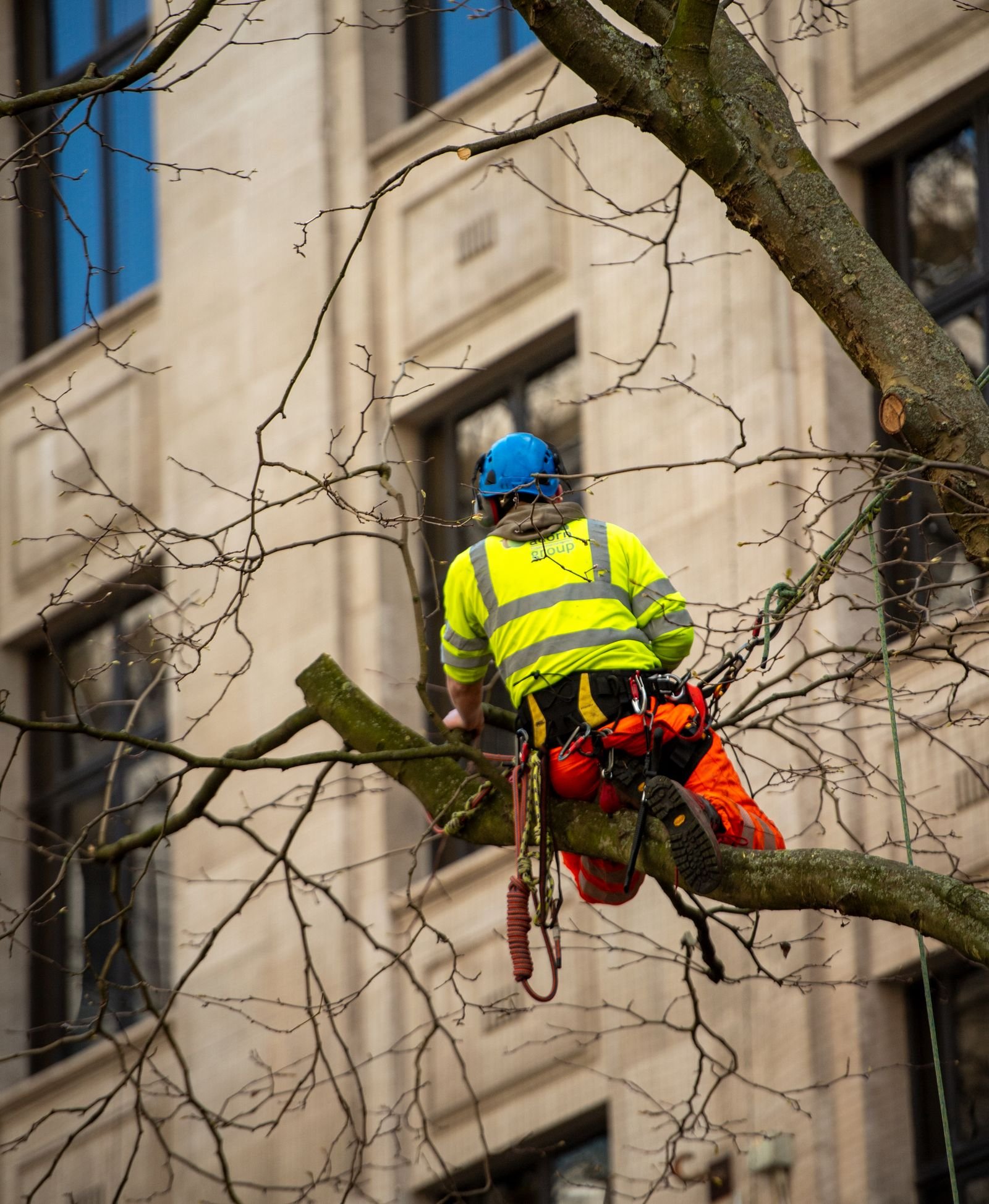
What good trimming does
Pruning for safety, not just looks
Most homeowners in Tallahassee call about trimming for one of a few reasons: limbs hanging over the roof, dead branches that could drop on the driveway, branches rubbing the house or the gutters, or a tree that just feels too big before hurricane season.
The aim of good pruning is to remove the specific parts that are a problem while keeping enough healthy canopy for the tree to feed itself. Typical work includes:
- Deadwooding: removing dead and dying branches, which can fall at any time
- Clearance: lifting or shortening limbs over roofs, driveways and walkways
- Reduction: shortening long, heavy limbs back to a suitable side branch to reduce weight at the tips
- Structural pruning: on younger trees, guiding them toward one strong central stem instead of competing trunks
Ask for this in writing
Which limbs will be removed, roughly how much of the canopy will come off, and whether cuts will be made back to branch unions rather than mid-limb. Vague quotes like “trim tree” make it hard to compare prices or know what you’re getting.
What to avoid
Pruning that does more harm than good
Topping
Cutting the top off a tree, or chopping big limbs back to stubs, is widely discouraged by arborists. The stubs tend to decay, and the fast regrowth is weakly attached and often more likely to break in the next storm.
Over-thinning (“lion-tailing”)
Stripping all the inner branches and leaving foliage only at the ends of limbs puts weight where it does the most damage and can make limbs more prone to breaking in the wind.
Climbing spikes on trees being kept
Spikes (gaffs) punch wounds into the bark. They’re normal for a tree that’s being removed, but not for one you’re keeping. Ask the crew how they’ll climb.
Timing
When to trim trees in Tallahassee
Dead or broken limbs: any time of year. Don’t wait for a convenient season if a dead limb is hanging over the house.
Live branches: UF/IFAS generally recommends pruning just before spring growth begins and avoiding pruning during the spring growth flush, when trees are putting their energy into new leaves.
Before hurricane season: the Atlantic season runs June 1 to November 30, peaking around early-to-mid September. Having limbs over the roof and obviously weak trees looked at in late winter or spring gives you time to get on a crew’s schedule before storms start.
Sources: UF/IFAS, when to prune; NOAA National Hurricane Center, tropical climatology.
Know your oaks
Laurel and water oaks need a closer look
Laurel oak and water oak are everywhere in Tallahassee, and UF/IFAS describes both as relatively short-lived: roughly 50–70 years for laurel oak and 30–50 for water oak. UF/IFAS also notes that older laurel and water oaks failed more often than other trees in hurricanes, and that decay can spread inward from pruning wounds and root damage.
So on an older laurel or water oak, a good crew may tell you that trimming won’t fix the real problem and that removal is the safer call. That’s worth hearing before you spend money on pruning.
Sources: UF/IFAS, Florida oaks; UF/IFAS, laurel oak.
Branches near power lines: don’t trim near lines yourself, and don’t ask an ordinary tree crew to work on limbs touching energized wires. Contact your electric provider (City of Tallahassee Utilities or Talquin Electric) about vegetation on their lines. The drop line from the pole to your house is a separate question, so ask your provider who handles clearing it.
Questions
Tree trimming FAQ
How often should trees be trimmed?
How much of a tree can be removed at once?
Can trimming prevent storm damage?
Do I need a permit to trim a tree?
What does tree trimming cost?
Does oak wilt affect Tallahassee trees?
Get a trimming quote
Tell us which trees, what you want done (clearance, deadwood, reduction) and send a photo if you can.